

Mississauga small businesses attract GTA buyers because they offer a compelling combination of value pricing, diverse industry sectors, and strategic location advantages that aren’t always available in Toronto’s high-pressure market. Buyers from across the Greater Toronto Area, from Brampton to Oakville and downtown Toronto, regularly cross city lines to evaluate opportunities in Mississauga’s commercial landscape.
The phenomenon isn’t about proximity alone. Mississauga sits at the intersection of major transportation corridors, provides access to Pearson International Airport’s business ecosystem, and maintains a lower cost of entry compared to Toronto properties. For entrepreneurs looking to acquire an established customer base without Toronto’s premium price tags, the city presents a practical middle ground.
What makes this trend particularly notable in 2026 is the variety of businesses changing hands. You’ll find everything from established service providers in Port Credit to manufacturing operations near the airport employment zones, retail storefronts in Streetsville, and professional practices serving Mississauga’s growing residential population of over 800,000 people.
This article breaks down why buyers choose Mississauga, how the city’s market dynamics create opportunities, what types of businesses typically attract cross-city interest, and the practical considerations that make these acquisitions work. Whether you’re evaluating a business for sale Mississauga or trying to understand regional buying patterns, understanding these factors helps explain why Canada’s sixth-largest city punches above its weight in the small business acquisition market.
What Mississauga Small Businesses Offer That GTA Buyers Want
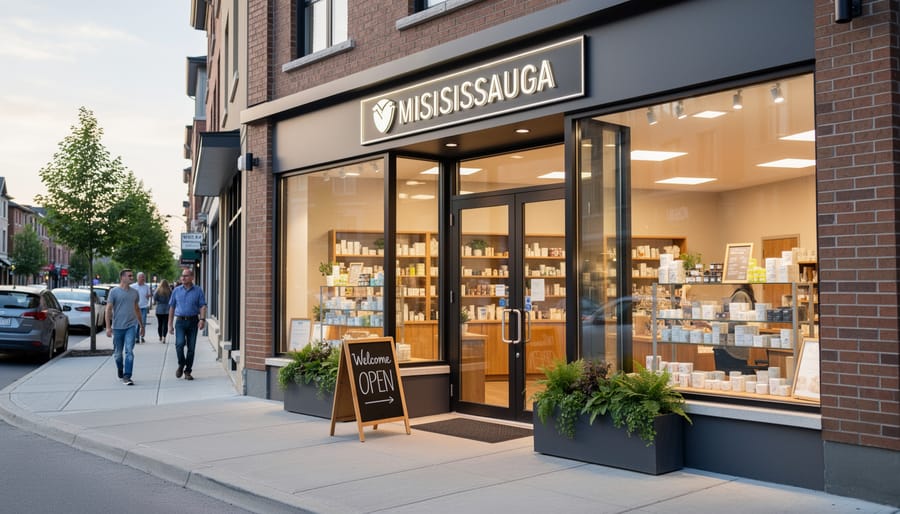
When GTA buyers venture outside their home cities, they’re not just looking for any storefront, they’re seeking a specific combination of quality, authenticity, and convenience that Mississauga’s small business scene has mastered. These aren’t corporate franchises or generic retailers. The Mississauga small businesses attracting regional attention are independent operations that have figured out how to deliver Toronto-level sophistication without downtown hassles.
What sets these businesses apart is their sweet spot positioning: suburban practicality meets urban expertise. A specialty grocer in Streetsville offers the same selection depth you’d find at niche shopping destinations in Toronto’s core, but with 50 parking spots out front instead of a scramble for street parking. An automotive specialist in Meadowvale provides the technical know-how of a downtown expert but charges 20 percent less because their lease costs half as much.
- Specialty Retail
- Independent stores focusing on specific product categories like international foods, cultural goods, or hobby supplies that serve niche markets across the entire GTA. These shops carry inventory depth that big-box stores can’t match.
- Local Artisan Shops
- Small businesses offering handcrafted goods, custom services, or locally-made products that reflect Mississauga’s diverse creative community. Buyers travel here for one-of-a-kind items not available through mainstream channels.
- Service-Based Businesses
- Professional services and skilled trades, from auto repair to tailoring, where expertise and fair pricing create loyal cross-city clientele. These businesses thrive on reputation and word-of-mouth referrals.
- Independent Dining Establishments
- Family-owned restaurants and food vendors serving authentic international cuisine, often run by first-generation entrepreneurs bringing genuine culinary traditions from their home countries.
The common thread is owner-operators who understand their specific customer base and aren’t constrained by corporate playbooks. A Mississauga restaurant owner can adjust their menu based on what their regulars actually want. A shop specializing in South Asian fabrics can stock the exact brands that Toronto and Brampton customers request by name. This flexibility and specialization create value that pulls buyers across city boundaries.
How Mississauga’s Market Position Works for Cross-GTA Appeal
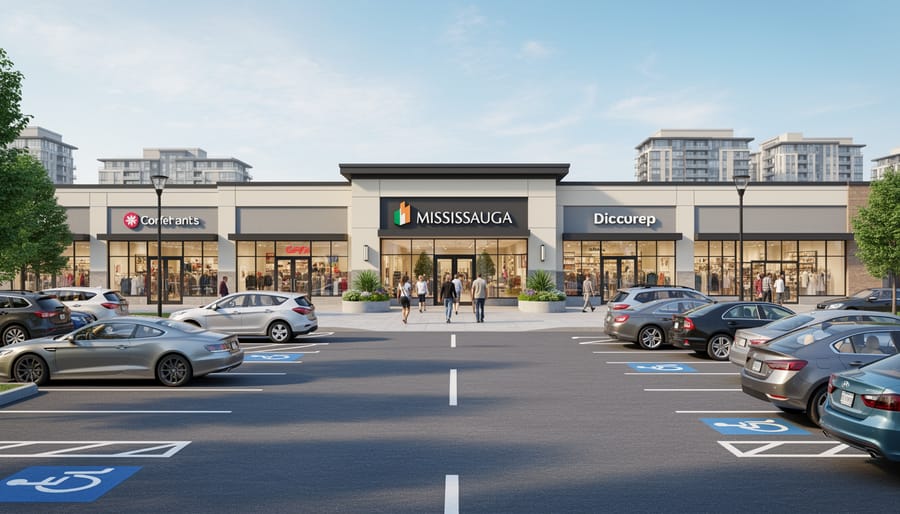
Geographic and Transportation Advantages
Mississauga sits at the geographic heart of the Greater Toronto Area, which translates to real convenience for buyers traveling from any direction. Someone in Scarborough faces a 30-minute drive west along the 401. A Burlington resident heads east on the QEW for roughly the same time. Brampton shoppers drop south on the 410, while Oakville buyers take a quick jaunt north.
This radial accessibility means most GTA residents can reach central Mississauga in under 40 minutes during off-peak hours, making a shopping trip or service appointment genuinely feasible on a weekday evening or weekend afternoon. The highway network converges here naturally, so buyers don’t navigate complicated routes through downtown congestion or residential neighborhoods.
Proximity to Pearson Airport adds another layer of accessibility. International travelers often combine business meetings or family visits in Mississauga with shopping stops, knowing they’re minutes from their departure terminal. The same highway corridors that move goods also move people efficiently, and Mississauga’s businesses benefit from that infrastructure daily. When buyers from across the region can reach you easily, they show up more often.
The Cost-Value Equation
Lower rent means lower prices, it’s that simple. When a Mississauga retailer pays $25 per square foot compared to $60 in Toronto’s core, those savings flow directly to customers. You’re getting the same quality products, often from the same suppliers, but without the downtown premium tacked on.
This isn’t about cutting corners. Mississauga small businesses stock the same brands, hire equally skilled staff, and maintain the same standards as their Toronto counterparts. The difference shows up at checkout. A specialty grocery store in Port Credit or a home décor shop in Streetsville operates with significantly lower overhead than a Queen West equivalent, allowing them to price competitively while maintaining healthy margins.
The cost advantage extends beyond rent. Parking costs nothing at most Mississauga locations, eliminating the $15, $30 you’d spend in Toronto lots or on street parking. Property taxes run lower. Delivery and receiving are easier when you’re not navigating congested downtown streets. These operational efficiencies accumulate.
TRREB commercial lease data consistently shows the gap between suburban and downtown commercial rates, a spread that translates to real savings for shoppers willing to drive fifteen minutes farther. You’re not compromising on selection or service quality. You’re simply avoiding the location premium that downtown businesses must charge to survive. For GTA buyers, especially those making larger purchases or stocking up on specialty items, the trip pays for itself.
Types of Mississauga Small Businesses Drawing Regional Buyers

Cultural and Specialty Retail
Mississauga’s demographic makeup, with significant South Asian, Chinese, Middle Eastern, Caribbean, and Eastern European communities, creates retail ecosystems that serve far beyond city boundaries. A shopper from North York might drive to a Polish deli on Dundas for specific imported goods their local European grocer doesn’t stock. Families from Scarborough regularly visit South Asian jewelry stores in Heartland Town Centre for wedding shopping, knowing the selection and authenticity exceed what downtown chains offer.
These aren’t sanitized, tourist-friendly versions of cultural retail. They’re working shops serving their communities first, which is precisely what gives them credibility with buyers across the GTA. The halal butcher in Streetsville sources whole animals and breaks them down on-site. The Filipino bakery in Cooksville makes pandesal fresh twice daily using recipes from the owner’s hometown.
The specialty angle extends beyond ethnic retail. Hobbyist shops, model train stores, quilting suppliers, bead and gemstone wholesalers, cluster here because commercial space costs half what Toronto charges, letting them maintain deep inventory that draws enthusiasts regionally. A miniature wargaming shop on Mavis can afford 3,000 square feet and dedicated gaming tables; its downtown equivalent would need three times the foot traffic just to break even.
Service-Based Businesses
Professional services, automotive specialists, and skilled trades thrive in Mississauga because they can offer competitive rates without compromising expertise. A mechanic in Streetsville or an accountant in Port Credit operates with significantly lower overhead than a Bay Street equivalent, savings they pass directly to clients. The result is a steady stream of customers willing to drive from Etobicoke, Brampton, or even downtown Toronto for quality work at reasonable prices.
Automotive services represent a particularly strong draw. Mississauga hosts specialized body shops, performance tuning garages, and import service specialists that built reputations through word-of-mouth within specific car enthusiast communities. A BMW specialist near Dixie Road might serve clients from across the GTA because they know European imports better than generic chain shops and charge less than downtown dealerships.
Skilled trades follow similar patterns. Contractors, electricians, and renovation specialists based in Mississauga attract homeowners from neighbouring cities who discovered them through referrals. These service providers combine suburban accessibility with professional standards, offer free parking for consultations, and typically have more flexible scheduling than their Toronto counterparts perpetually booked months ahead.
Dining and Culinary Experiences
Mississauga’s dining scene punches well above its weight when it comes to authentic international cuisine. Food enthusiasts from Toronto and Oakville regularly make the drive for restaurants that serve regional specialties you won’t find in generic downtown eateries, Pakistani karahi houses in Malton, Sri Lankan hoppers spots along Eglinton, or Hakka Chinese restaurants that originated here and still do it best. These aren’t fusion experiments or watered-down versions; they’re family-run establishments serving the same dishes you’d get in Lahore, Colombo, or Kolkata, often run by first-generation immigrants cooking for their own communities. The combination of lower rent (which keeps prices reasonable), established cultural neighbourhoods (which support authentic ingredients and recipes), and dedicated customer bases means Mississauga has become the GTA’s go-to destination for serious eaters seeking the real thing rather than tourist-friendly approximations.
Key Reasons Buyers Cross City Lines for Mississauga Businesses
Authenticity and Specialization
Mississauga’s population represents over 200 cultural backgrounds, creating market conditions that allow specialized businesses to thrive where they’d struggle in less diverse areas. When a Polish deli in Port Credit stocks authentic smoked kielbasa from a specific region, or a South Asian grocer carries fifteen varieties of basmati rice with distinctions most mainstream retailers ignore, they’re serving customers who know the difference intimately.
This demographic depth means specialty businesses can focus narrowly and still find their audience. A Persian spice merchant doesn’t need to dilute their inventory with generic offerings, thousands of local households plus GTA-wide customers seeking specific ingredients support genuine specialization. The owner typically comes from that community, understands the products firsthand, and can explain why one saffron costs three times another.
Big-box stores homogenize inventory for mass appeal. Mississauga’s small businesses do the opposite: they go deep rather than broad. A Filipino bakery makes pan de sal daily using traditional methods because enough customers, both local and from Scarborough or Brampton, recognize and value the real thing. Authenticity isn’t marketing language here; it’s the business model, sustained by customers willing to drive across the GTA for products they can’t find elsewhere.
Practical Shopping Advantages
The practical realities of shopping in Mississauga versus downtown Toronto become immediately apparent the moment you arrive. Finding parking at a Mississauga small business typically means pulling into a dedicated lot steps from the entrance, no circling blocks, no expensive hourly rates, and no stress about meter times. Most independent retailers and service providers occupy suburban plazas with generous parking that costs nothing, a stark contrast to the $15-per-hour lots or scarce street parking that define the Toronto shopping experience.
Inside, the difference continues. Mississauga stores operate with breathing room that downtown spaces can’t afford. Aisles are wider, displays are less crammed, and you can browse without navigating shoulder-to-shoulder crowds or waiting for others to move. This spaciousness isn’t just pleasant, it’s practical when you’re shopping for furniture, bulk groceries, or anything that requires examining products closely. The same principle applies to service businesses: automotive shops have proper customer waiting areas, salons book appointments with buffer time, and restaurants don’t rush tables.
The relaxed pace extends to customer service. Staff at Mississauga small businesses generally have more time per customer because foot traffic, while steady, doesn’t reach the overwhelming volumes of Queen Street or Kensington Market. You can ask questions, get personalized recommendations, and complete transactions without feeling pressured to hurry for the next person in line. For GTA buyers tired of the hustle required to simply navigate neighborhoods and shop efficiently in Toronto’s core, Mississauga offers the rare combination of quality selection with suburban convenience.
Value Without Compromise
The value equation in Mississauga isn’t about sacrificing quality, it’s about paying less for the same caliber of goods and services you’d find in Toronto’s premium neighborhoods. A family-run Persian grocery in Port Credit stocks the same specialty ingredients as Yorkville’s upscale markets, but charges 15-20% less because their monthly rent is half. An automotive detailing shop near Square One uses identical premium products and techniques as Toronto’s high-end services, yet prices their packages $50-75 lower. The savings stem directly from operating costs: commercial leases in Mississauga run substantially cheaper than comparable Toronto spaces, and businesses pass those savings to customers rather than pocket them as pure profit.
For GTA buyers doing the real cost math a thirty-minute drive to Mississauga pays off quickly. Buy groceries, get your car serviced, and pick up custom furniture in one trip, and you’ve saved enough to justify the gas and time. The businesses themselves recognize this advantage, many explicitly market their Toronto-equivalent quality at suburban prices, knowing that transparency about their cost structure builds trust with buyers who’ve learned to be skeptical of “deals” that compromise on craftsmanship or freshness.
What This Means for the GTA Business Landscape
The pattern of GTA buyers seeking out Mississauga small businesses reflects a fundamental shift in how the region’s economy functions. Rather than operating as isolated municipal silos, cities across the Greater Toronto Area now form an interconnected commercial ecosystem where specialized businesses draw customers based on value and expertise rather than postal codes.
This cross-border shopping behavior strengthens regional economic resilience. When buyers from Toronto, Brampton, or Oakville patronize Mississauga businesses, they create revenue streams that support local employment while distributing economic activity beyond traditional downtown cores. The tax revenue generated helps fund municipal services, and successful businesses often expand or spawn new ventures, creating a multiplier effect that benefits the entire region.
For entrepreneurs, Mississauga’s model demonstrates that suburban locations can compete effectively without matching downtown Toronto’s commercial rents. A well-positioned business with genuine expertise or authentic cultural offerings can build a regional customer base even outside the urban core. This accessibility lowers barriers to entry for new business owners and provides alternatives to the increasingly expensive downtown marketplace.
The trend also highlights how demographic diversity drives commercial opportunity. Mississauga’s multicultural communities have created business niches that serve specific needs across the entire GTA, showing that suburban areas can be innovation hubs rather than just bedroom communities. As the housing crisis pushes more residents to suburban areas, these established commercial centers become increasingly vital to maintaining quality of life and economic vitality.
This distributed commercial success ultimately creates a more balanced, resilient regional economy where opportunity isn’t concentrated in a single downtown core but spread across thriving nodes throughout the GTA.
Common Questions About Shopping Mississauga Small Businesses
Most GTA buyers considering a trip to Mississauga for shopping or services have similar practical questions. The answers typically confirm what regular cross-city shoppers already know: the logistics are straightforward, and the benefits justify the drive.
How long does it take to drive to Mississauga from other GTA cities?
From downtown Toronto, expect 30-45 minutes via the Gardiner and 427 or QEW during off-peak hours. Brampton residents can reach central Mississauga in 15-20 minutes, while Oakville and Burlington are 20-30 minutes away via the QEW or 403.
Is parking really that much easier than Toronto?
Yes. Most Mississauga small businesses offer dedicated parking lots or share plaza parking with ample spaces, and street parking in commercial areas is typically free or inexpensive. You won’t circle blocks hunting for spots.
Do these businesses accept the same payment methods as Toronto shops?
The vast majority accept debit, credit, and tap payments just like anywhere in the GTA. Some smaller, family-run operations prefer cash for small purchases, but most have adapted to standard electronic payment systems.
Are prices actually lower than comparable Toronto businesses?
Generally, yes. Lower commercial rent in Mississauga allows many small businesses to pass savings to customers, particularly for specialty goods, automotive services, and dining. You’ll often find 10-20% better pricing on identical items or services.
How do I find the best businesses to visit?
Community recommendations work best. Check neighbourhood Facebook groups, Reddit threads for specific cultural communities, and Google reviews from verified local customers. Word-of-mouth from friends who’ve made successful trips is still the most reliable guide.
The consistency of these answers across different buyer experiences speaks to how established this cross-GTA shopping pattern has become. First-time visitors often discover that their concerns about logistics were overblown, while the actual benefits, selection, value, and shopping experience, exceed expectations. Once you’ve made the trip and found a go-to business, the drive becomes routine rather than a special expedition.
The pull of Mississauga’s small business community across the GTA isn’t a fluke, it’s the logical outcome of geography, economics, and cultural diversity converging in one accessible location. When buyers from Toronto, Brampton, Oakville, and beyond make the drive, they’re not just seeking convenience. They’re tapping into a market that delivers specialized goods, authentic experiences, and professional services at price points that reflect suburban operating costs rather than downtown premiums.
What keeps this trend alive is simple: these businesses consistently deliver value without compromise. The Ethiopian grocer with ingredients unavailable in Toronto. The collision repair specialist with a three-week shorter wait time. The Sri Lankan restaurant where the menu hasn’t been diluted for mass appeal. These aren’t novelties, they’re established operations serving a loyal, region-wide customer base that understands quality when they find it.
The GTA’s economy thrives when buyers look beyond municipal boundaries to find what they actually need, not just what’s closest. Mississauga’s small businesses have built something worth the trip: a commercial ecosystem where parking isn’t a blood sport, where owners know their inventory, and where your dollar stretches further without settling for less.
Next time you’re planning a specific purchase or hunting down a particular service, consider widening your search radius. The best option might be one highway exit away.